NT Scan & First-Trimester Screening
11–14 week nuchal translucency scan, FMF (UK) certified.
Book thisExpert pregnancy scans, high-risk pregnancy care and compassionate counselling, from a fetal medicine specialist trained at BLK-Max Super Speciality Hospital, New Delhi and certified by the Fetal Medicine Foundation (UK).
MBBS · MD (Obstetrics & Gynaecology) · Fellowship in Fetal Medicine
About
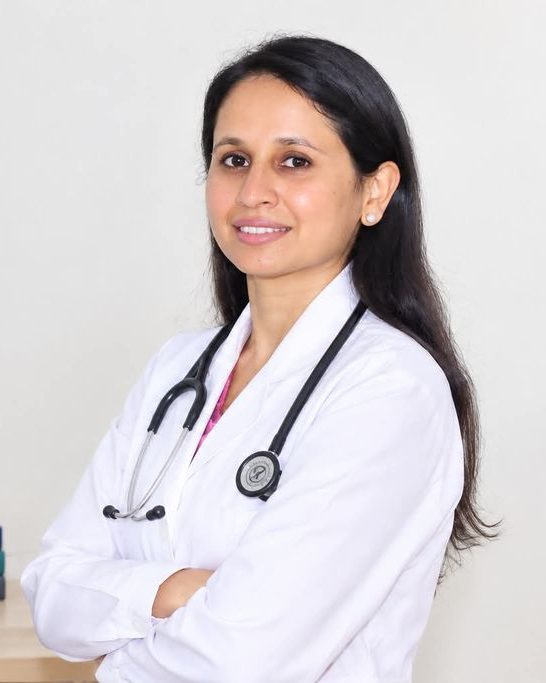
Dr. Sushma Dhakal is a Nepali obstetrician-gynaecologist with a Fellowship in Fetal Medicine from BLK-Max Super Speciality Hospital, New Delhi (2025–2026). She holds FMF (UK) certification in NT and anomaly scanning and performs first-trimester, anomaly, genetic sonogram, neurosonogram, growth and Doppler scans, as well as amniocentesis, chorionic villus sampling and fetal procedures. Before her fellowship she worked as Registrar at Kirtipur Hospital and as Lecturer at Nepal Medical College, and as Medical Officer at Patan Hospital and KIST Medical College. She counsels families on fetal structural and genetic conditions and high-risk pregnancy in Nepali, English and Hindi.
Services
Specialised scans and care for you and your baby.
11–14 week nuchal translucency scan, FMF (UK) certified.
Book thisDetailed scan of your baby's organs, structure and markers of genetic conditions.
Book thisFocused assessment of your baby's brain and spine.
Book thisTracking growth, fluid and blood flow through later pregnancy.
Book thisGenetic analysis by amniocentesis and chorionic villus sampling.
Book thisSpecialised fetal procedures, including fetal reduction where indicated.
Book thisClose monitoring and management for complicated pregnancies.
Book thisClear, kind guidance on fetal structural and genetic conditions and your choices.
Book thisHow it works
Choose a service, date and time in under a minute.
We call or WhatsApp you to confirm and share preparation tips.
An unhurried consultation and scan with the doctor.
Leave with a report, a plan and answers to your questions.
Free counselling videos
Short, trusted explanations from the doctor on scans, screening and a healthy pregnancy.
Health guides
Short, doctor-written guides to help you understand your scans and tests.
What the nuchal translucency (NT) scan checks, when to have it (11–13+6 weeks), how combined screening works, and what a high-risk result means.
Read guideWhat the anomaly scan (level II / TIFFA / mid-pregnancy scan) checks at 18–22 weeks, what it can and cannot detect, how to prepare, and what happens if a finding is seen.
Read guideHow amniocentesis and chorionic villus sampling (CVS) work, when they are offered, the real miscarriage risk (about 0.1–0.5% or less), and what to expect before and after.
Read guideWhy growth and Doppler scans are done, what IUGR / fetal growth restriction means, the warning signs, how babies are monitored and when delivery is planned.
Read guideWhat genetic counselling in pregnancy involves, who should consider it (high-risk screening, scan findings, family history, thalassaemia, consanguinity), screening vs diagnostic tests, and how decisions are supported.
Read guideWhy an early pregnancy scan is done at 6–10 weeks, what it can and cannot show, how your due date is set, and when a repeat scan is advised.
Read guideWhat a fetal echo scan is, who needs one, when it is done (usually 18–24 weeks), what it can and cannot detect, and what happens if a heart problem is found.
Read guideWhat a late-pregnancy well-being scan checks (growth, fluid, placenta, Doppler), how the biophysical profile score works, who needs it, and why reduced movements need same-day review.
Read guideHow the combined first-trimester test and NIPT (cell-free DNA) compare: timing, accuracy, what each looks for, cost, and why both are screening tests, not diagnosis.
Read guideWhy chorionicity matters in twins, how it is seen at 11–14 weeks, scan schedules for DCDA and monochorionic twins, and the warning signs of twin-to-twin transfusion syndrome (TTTS).
Read guideWhat a cervical length scan is, who should have one, what a short cervix (25 mm or less) means, and how progesterone or cerclage can lower the risk of preterm birth.
Read guideWhat a fetal neurosonogram is, when it is recommended (such as ventriculomegaly or a family history), how it is done, its limits, and when follow-up scans or fetal MRI are advised.
Read guideAppointments
Choose Consultation / Scan or Counselling (in person or online), then pick a time. You get an instant email confirmation.
Choose a service
Prefer to talk first? WhatsApp us Call
Kind words
“My NT scan result worried me at first. Doctor explained the numbers slowly and what the next steps could be. I went home much calmer.”
“During the anomaly scan she showed us each part of the baby on the screen and answered all our questions without rushing.”
“I had high blood pressure in my last pregnancy, so this time she followed me closely with regular scans. I always knew what the plan was.”
“We were unsure about amniocentesis. She explained the benefits and the risks honestly and let us take our time to decide.”
“My baby was measuring small, so we had growth and Doppler scans every two weeks. Her clear updates made a stressful time easier.”
FAQ
Between 11 weeks and 13 weeks 6 days of pregnancy.
Usually between 18 and 22 weeks of pregnancy.
Yes. She holds Fetal Medicine Foundation (UK) certification for NT and anomaly scans.
Yes, one companion is welcome during the scan and counselling.
Yes. Pick the online option when you book a counselling slot and you'll receive a video-call link.
Nepali, English and Hindi.
Fees vary by service. Please call or WhatsApp us for current pricing.
Contact
Call, WhatsApp or email. We usually reply the same working day.
| Sun – Fri | 9:00 AM – 5:00 PM |
|---|---|
| Saturday | Closed |